

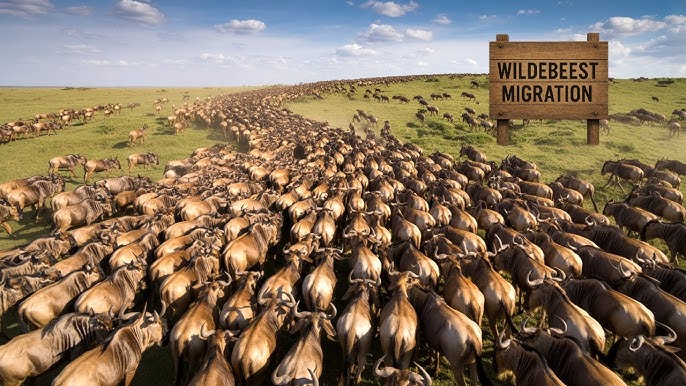
Every year, something extraordinary happens across the open plains of East Africa. Over 1.5 million wildebeest, along with hundreds of thousands of zebra and wildebeest companions, begin moving in a circle so massive it takes an entire year to complete. This is the great wildebeest migration — and once you understand what’s really happening, you’ll never look at the African savanna the same way again.
I’ve spoken to guides who’ve watched this spectacle for two decades, and they still get goosebumps.
1.5 million wildebeest. Two countries. One ancient, unstoppable cycle — the largest land migration on Earth.
What makes the migration of wildebeest so compelling is that it has no leader. No single animal decides the direction. The herd moves on instinct, driven purely by rain, grass, and survival — a living, breathing system that has been running longer than most civilizations. Scientists call it a wildebeest type of migration known as circular or loop migration, where animals follow a seasonal calendar across two countries without a map.
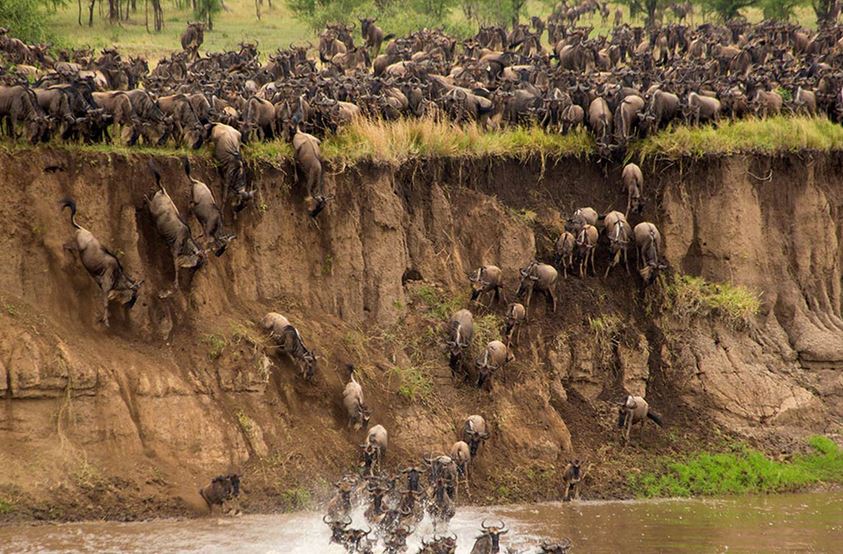
Embark on the 4 Days Best Mara River Crossing Safari Package, a thrilling journey into the heart of the Masai Mara. This safari is designed to give you front-row seats to the world-famous Mara River crossing, where thousands of wildebeest and zebras plunge into crocodile-filled waters during the Great Migration.

Embark on a thrilling 5 Days Great Wildebeest Migration Masai Mara Safari, one of nature’s most spectacular events. Witness millions of wildebeest, zebras, and gazelles crossing the Mara River in search of greener pastures, while predators like lions and crocodiles lie in wait.
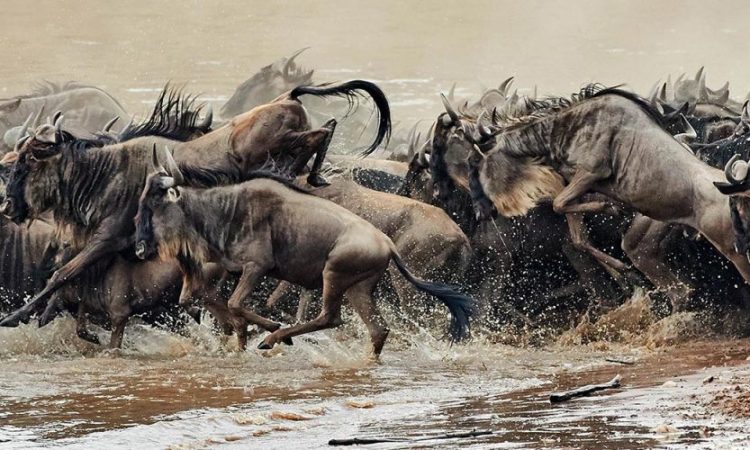
Our 3 Days Great Migration Safari Deal Masai Mara is designed for travelers who want to experience the drama and beauty of the wildebeest migration within a short but immersive itinerary. This safari deal combines wildlife encounters with cultural experiences, offering flexible accommodation options from budget camps to luxury tented stays.

This 8-day safari combines Kenya’s Masai Mara and Tanzania’s Serengeti during the peak migration season. Guests will witness millions of wildebeest and zebras crossing the Mara River, predators in action, and breathtaking landscapes.

This 6-day budget-friendly safari offers travellers the chance to witness the legendary Great Migration across Kenya and Tanzania. From the rolling plains of the Masai Mara to the endless Serengeti and the breathtaking Ngorongoro Crater, guests will enjoy thrilling Safaris.

why do wildebeest migrate? The short answer is grass and water. The long answer is that the African wildebeest migration follows the rains in a clockwise loop across the Serengeti in Tanzania and the Masai Mara in Kenya. When the southern Serengeti greens up after the short rains, the herds arrive to calve. When it dries out, they move north. The grass is always greener on the other side — and for wildebeest, that’s literally life or death.
The wildebeest migration distance covered annually is roughly 800 kilometers. That’s not a vacation stroll — it’s a constant push through predator country, river crossings, and open terrain. The blue wildebeest, which makes up the bulk of the herd, does this year after year, following the same ancient trails. Understanding this movement is what makes planning a wildebeest migration safari so rewarding — you’re not chasing animals, you’re meeting them where they’re going to be.
The wildebeest migration is a year-round spectacle. Each season offers a unique chapter in the greatest wildlife show on Earth. Explore the four key phases below.
This is the time of birth and renewal. Over 500,000 wildebeest calves are born within a few weeks, attracting predators and creating dramatic wildlife encounters. The southern Serengeti's short-grass plains provide the perfect nursery.
The herds begin their great march toward the western corridor and the Grumeti River. April sees heavy rains, but by June the landscape is lush and the columns are on the move. This is a quieter time for visitors but offers spectacular scenery.
The most dramatic phase of the migration. The herds arrive at the Mara River in Kenya, where they must cross despite waiting crocodiles. July through September offers the highest chance of witnessing these heart-stopping events.
The short rains arrive and the herds begin their journey back south to the Serengeti's short-grass plains. This is a time of transition, with scattered herds and renewed landscapes. It's also an excellent time for those seeking fewer crowds.
Best time summary: For dramatic visuals, target July–September. For calving and predator action, January–February is unbeatable. Every month offers a unique perspective.
Booking a wildebeest migration safari requires more precision than a typical wildlife trip. The wildebeest migration 2026 season is already seeing strong demand from early planners, which means the best camps along the route — especially those near the best place to see wildebeest migration crossings — fill up months in advance. I’ve seen travelers show up with the right dates but the wrong location and miss the crossing by thirty kilometers.
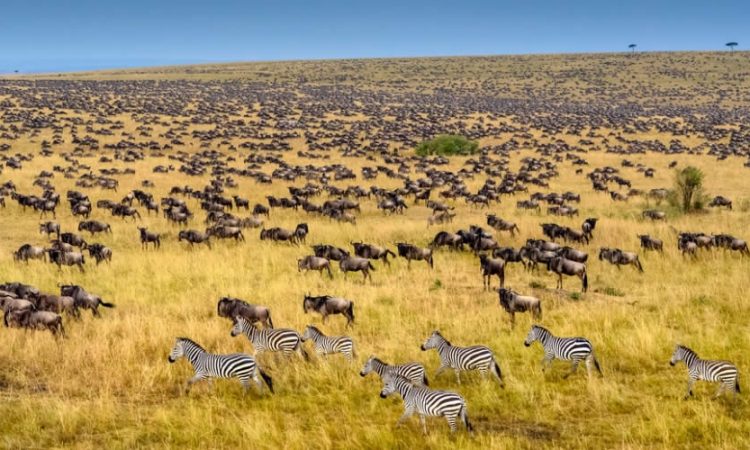

Good wildebeest migration safari packages will position you strategically based on the Kenya & Tanzania wildebeest migration map and current movement patterns.
wildebeest migration safaris operators track the herd’s progress in real time and move guests accordingly. When comparing wildebeest migration tours, prioritize camps with mobile or fly-camp options — flexibility is everything when the herd doesn’t follow a fixed schedule. Also ask whether your package includes the Tanzania wildebeest migration safari segment alongside the Kenya leg, as the great wildebeest migration endpoint experience is far richer when you follow the full arc.
The wildebeest migration runs year-round in a circular loop. The most dramatic phase — the Mara River crossings — happens between July and October during the wildebeest migration in Kenya.
The wildebeest migration runs throughout the entire year — it never fully stops. But the experience changes dramatically depending on which wildebeest migration month you visit. January and February bring the calving season to the southern Serengeti, where half a million calves are born within weeks. By June, the herd is pushing northwest, and from July through October, the famous Mara River crossing peak — this is when the wildebeest migration in Kenya's Masai Mara reaches its most intense and photographed phase.
If you're asking when is the wildebeest migration at its most dramatic, the answer is July to October for the river crossings, and January to February for the calving spectacle in Tanzania. The best time to see wildebeest migration ultimately depends on what you want to witness — raw predator-prey action at the river, or the tender chaos of thousands of newborns taking their first steps on the open plains. Either way, booking early is non-negotiable, as the top wildebeest migration safari camps along the route fill up months ahead of the wildebeest migration season.
The Masai Mara in Kenya for river crossings (July–October) and the southern Serengeti in Tanzania for calving (January–March) are the top two. Both rank as the best place to see wildebeest migration depending on season.
The annual wildebeest migration distance is approximately 800 kilometers across the Serengeti-Mara ecosystem, making it one of the longest overland animal movements on Earth.
Yes — professional wildebeest migration safari packages track the herd's real-time movement. Attempting this independently without local knowledge significantly reduces your chances of witnessing key events like the river crossing.
There is no fixed endpoint. The great wildebeest migration endpoint is a loop — the herd completes a full circuit annually, returning to the southern Serengeti to calve and beginning the cycle again.
Yes. The zebra and wildebeest migration happen simultaneously. Zebras typically lead the way, grazing the taller grass and leaving the shorter, more nutritious shoots for the wildebeest behind them.
Join our expertly guided safaris to the Masai Mara during peak river crossing season. Our guides know exactly where the herds will be — and they'll put you right in the heart of it.
WhatsApp us